Bonus Designs and Their Influence on User Longevity in Mobile Live Dealer Platforms
Bonus Designs and Their Influence on User Longevity in Mobile Live Dealer Platforms
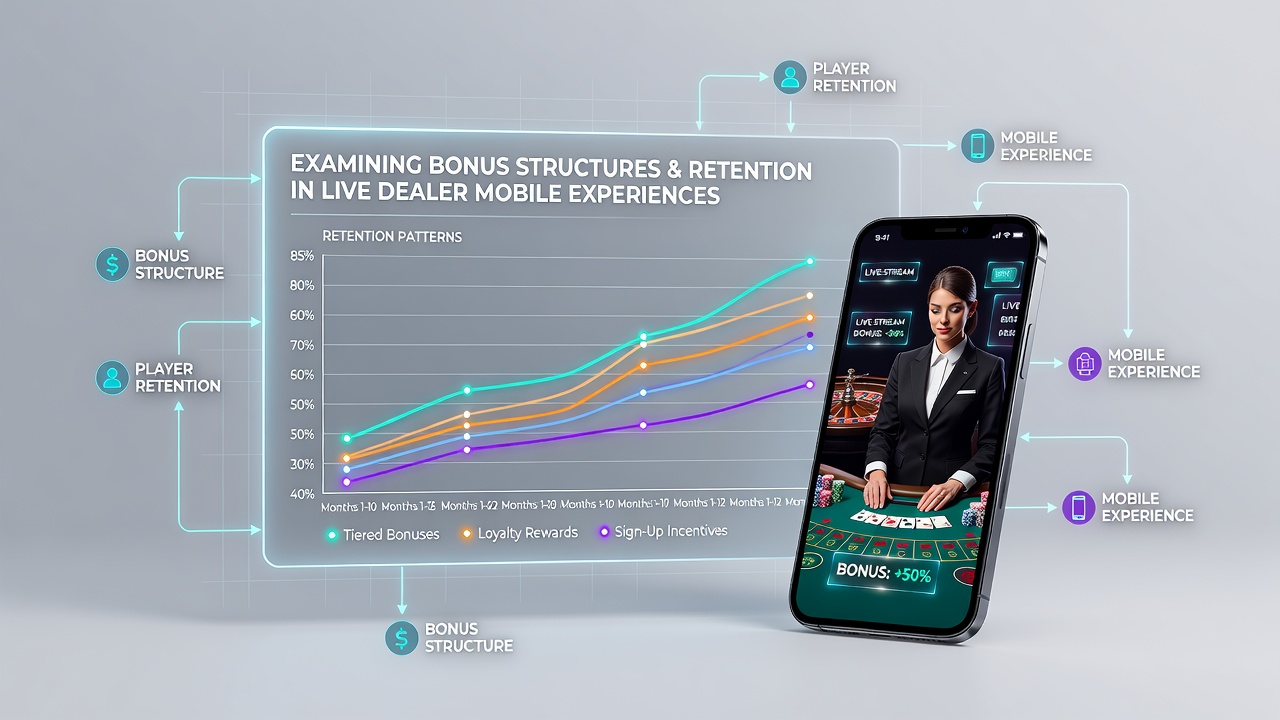
Live dealer games on mobile devices combine real-time video streams with interactive betting interfaces, and bonus structures play a measurable role in how long players remain active across these platforms. Operators deploy welcome packages, reload incentives, cashback programs, and loyalty tiers that tie directly to live dealer sessions in blackjack, roulette, and baccarat. Retention data collected from multiple jurisdictions shows that players who engage with structured bonuses tend to log longer cumulative playtime within the first ninety days compared with those who do not, according to aggregated figures released by iGaming Ontario.
Types of Bonus Structures in Mobile Live Dealer Environments
Operators structure bonuses in several distinct formats that affect session frequency and duration. Deposit-match offers require an initial funding action and often include wagering requirements tied to live dealer table limits, while free-bet credits allow immediate participation without additional deposits. Cashback mechanisms return a percentage of net losses over weekly or monthly periods, and these credits frequently appear as playable funds within live dealer lobbies. Loyalty programs accumulate points based on real-money wagers placed during streamed games, unlocking tiered benefits that range from reduced withdrawal times to exclusive table access.
Research indicates that mobile-specific bonuses, such as push-notification triggered reloads, increase return visits within twenty-four hours. One study tracking app telemetry across North American operators found that players receiving time-limited live dealer bonuses completed 37 percent more sessions than those offered only generic slot promotions.
Retention Patterns Linked to Bonus Timing and Conditions
Timing of bonus releases correlates with measurable differences in churn rates. Daily login rewards that unlock live dealer tables produce steadier retention curves than larger but less frequent milestone bonuses. Wagering requirements attached to bonuses also shape behavior: requirements below 30x total deposit tend to see higher completion rates, whereas steeper thresholds lead to earlier drop-off once players exhaust initial funds.

Platform data examined by the European Gaming and Betting Association in 2025 revealed that players who redeemed at least one live dealer bonus within the first week after registration showed a 22 percent lower churn probability at the sixty-day mark. The same dataset indicated that bonus funds restricted to table games rather than slots produced longer average session lengths, because live dealer rounds typically last longer than automated slot spins.
Geographic Variations in Bonus Impact
Regulatory environments influence which bonus formats operators can promote and how those formats affect retention. In New Jersey, where the Division of Gaming Enforcement requires clear disclosure of wagering terms, bonus redemption rates sit higher than in markets with looser transparency rules. Canadian provincial frameworks, including those administered by iGaming Ontario, mandate that bonus values appear in real-time balance displays, a practice that correlates with fewer early exits during live dealer sessions.
Australian operators operating under state licensing report that loyalty points earned exclusively from live dealer play convert into higher retention when redemption options include physical casino experiences rather than additional digital credits. These cross-regional differences demonstrate that bonus design cannot be separated from the legal and cultural context in which mobile platforms operate.
Measurement Approaches Used by Operators
Operators track retention through cohort analysis that segments players by bonus type received at registration. Metrics include day-one, day-seven, and day-thirty return rates, alongside average revenue per user calculated separately for bonus users and non-bonus users. Heatmap visualizations of live dealer table activity show that bonus-funded players cluster around peak evening hours, while organic players spread activity more evenly across the day.
Third-party analytics providers supply standardized dashboards that allow operators to compare retention curves before and after changes to bonus structures. These tools reveal, for instance, that extending the validity period of live dealer cashback from seven to fourteen days lifts thirty-day retention by roughly nine percentage points across several tested markets.
Conclusion
Bonus structures function as measurable variables within the retention equation for mobile live dealer experiences. Data gathered across multiple regulatory regions demonstrate consistent patterns linking bonus timing, wagering conditions, and redemption ease to session frequency and long-term player activity. As platforms continue to refine these mechanisms through 2026, operators rely on granular cohort tracking to adjust incentive frameworks and maintain stable user bases in an increasingly competitive mobile gaming environment.