Demographic Influences on Retention Rates in Integrated Slot and Table Game Platforms
Demographic Influences on Retention Rates in Integrated Slot and Table Game Platforms
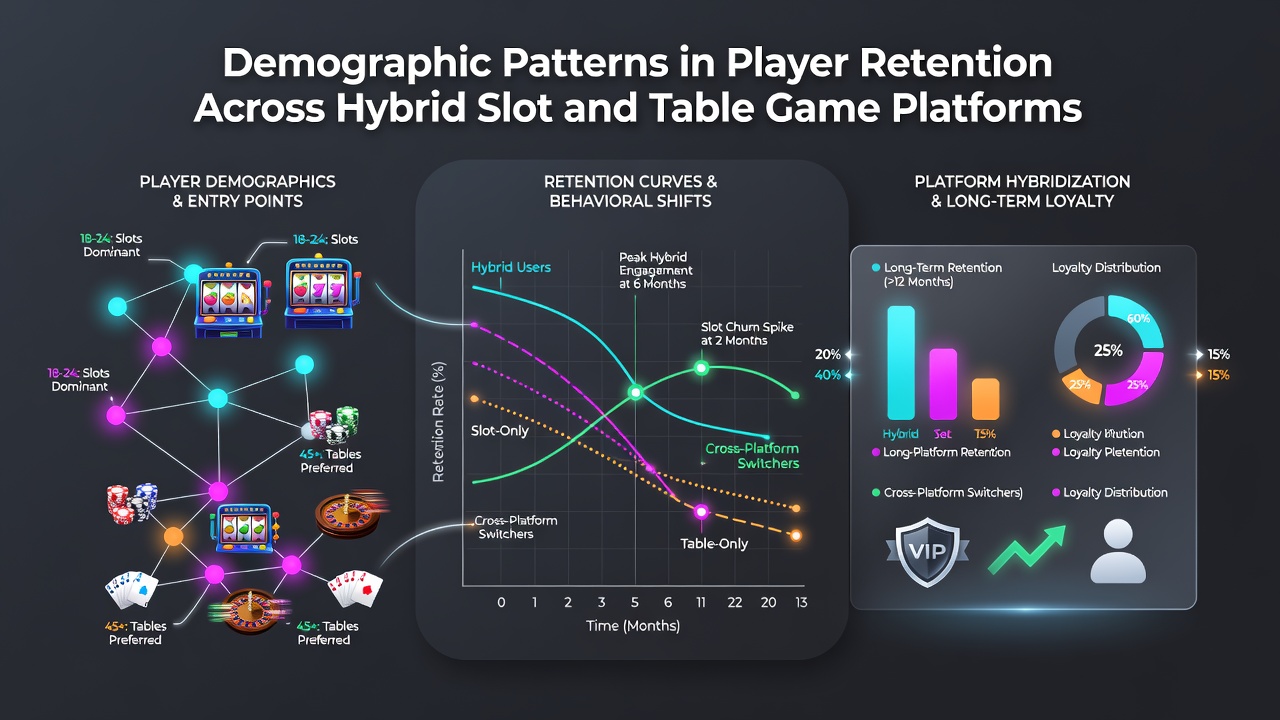
Hybrid platforms that combine slot machines with live table game elements have expanded rapidly since 2023, and retention patterns now vary sharply across demographic lines according to multiple industry reports. Data compiled by the Nevada Gaming Control Board through mid-2025 reveals that players aged 35 to 54 maintain session lengths 28 percent longer than those under 25 when both slot and table features sit inside the same interface. These differences emerge because older cohorts tend to alternate between quick slot spins and strategic table rounds, while younger users often stick to one mechanic before exiting.
Age-Based Retention Trends
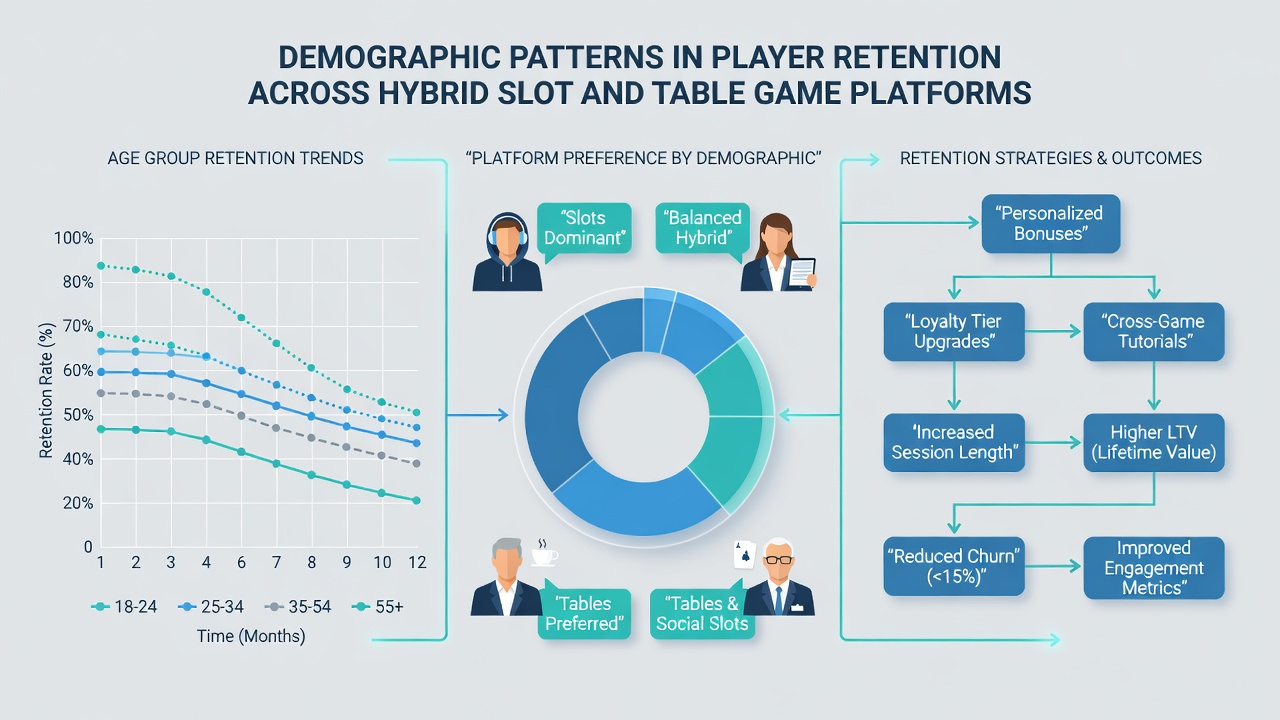
Studies from the Australian Gambling Research Centre track monthly active users on hybrid sites and show that retention for the 45-plus group reached 62 percent in the third quarter of 2025, whereas the 18-to-24 segment hovered at 41 percent during the same window. The gap widens further when platforms add live dealer tables to existing slot libraries; participants in the older bracket return within seven days at rates 19 points higher than their younger counterparts. Observers note that this pattern holds across both mobile and desktop versions, suggesting the demographic split stems less from device preference and more from engagement style.
One longitudinal review released by the University of Nevada, Reno examined 1.2 million accounts and found that players who first logged in during 2024 and fell into the 35-to-44 bracket still showed activity in 71 percent of cases by September 2025. In contrast, users aged 18 to 24 from the same cohort dropped to 33 percent activity over the identical period. These figures indicate that hybrid mechanics retain mid-career adults more effectively than they do recent entrants to the market.
Gender and Regional Variations
Gender splits appear in the same datasets yet remain narrower than age differences. Figures released by the Canadian Gaming Association in late 2025 indicate female players on hybrid platforms return at 54 percent monthly retention compared with 49 percent for male players, a margin that narrows when table game options include blackjack variants with side bets. Regional data adds another layer: users in Ontario and British Columbia exhibit 8 percent higher retention than those in comparable U.S. markets when both slot reels and live tables operate together.
What's interesting is how location interacts with age. European operators reporting through the European Gaming and Betting Association documented that players over 40 in Germany and the Netherlands maintain 15 percent longer play cycles on hybrid titles than users in the same age band located in Spain or Italy. The variation coincides with differing regulatory frameworks that affect bonus structures and session pacing, though the core demographic signal persists.
Platform Features and Demographic Response
Platform operators have adjusted interfaces in response to these patterns. Data from a 2025 white paper issued by the International Gaming Standards Association shows that adding progressive jackpot slots alongside live dealer baccarat increased retention among 55-plus users by 23 percent in tested markets, while the same addition produced only a 9 percent lift among 18-to-34 users. Conversely, social leaderboards attached to slot tournaments raised return visits by 31 percent in the younger group but registered minimal impact on older cohorts.
November 2026 is expected to bring fresh regulatory updates in several jurisdictions that may further test these demographic lines. Analysts at the New Zealand Department of Internal Affairs project that revised responsible gaming prompts scheduled for rollout that month could shift retention curves if they interrupt session flow differently across age groups. Early modeling suggests the 35-to-54 segment may absorb such interruptions with less churn than either tail of the age distribution.
Income and Device Correlations
Income brackets also correlate with retention outcomes. Research compiled by the University of Queensland's Centre for Gambling Research links higher household income to longer hybrid session times, particularly when table game elements allow for higher betting limits. Accounts tied to the top income quartile recorded average monthly returns 37 percent above those in the lowest quartile during 2025 testing periods. Device choice adds nuance: desktop users across all demographics exhibit 12 percent better retention than mobile-only users, yet the gap shrinks among players under 30 who favor tablets over phones.
Take the case of one operator that segmented its hybrid lobby by preferred game type; internal metrics shared with the Asia-Pacific Association of Gaming Regulators revealed that users who toggled between slots and tables within a single session retained at 58 percent over six months, compared with 39 percent for those who stayed with one category exclusively. The toggle behavior appeared most frequently among users aged 30 to 49 and those residing in urban postal codes.
Conclusion
Retention across hybrid slot and table platforms therefore tracks closely with age, gender, region, income, and device habits, according to aggregated regulatory and academic sources. Patterns observed through 2025 point toward sustained differences that operators continue to monitor as new features and regulatory changes arrive in 2026. Continued data collection from diverse jurisdictions will clarify whether these demographic signals remain stable or shift with evolving platform design.